
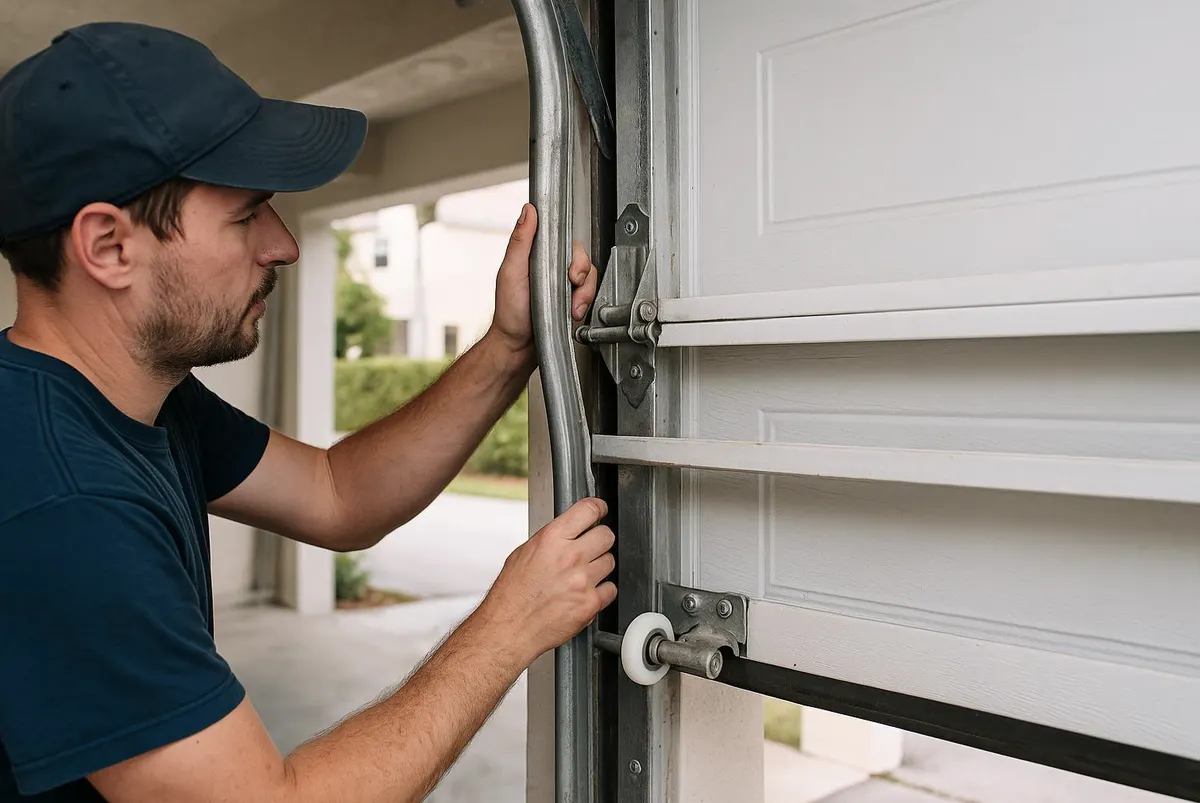
Getting a Garage Door Ready for Winter: The Short Answer
Seal the gaps, lubricate the moving parts, check the springs and cables, and test the safety sensors before the first hard freeze. That's the whole job in one sentence. The rest of this guide is about doing each step right, because a garage door that's ignored until January in a Connecticut winter tends to fail at the worst possible moment — usually during a nor'easter, with a car half in and half out of the bay.
Why This Matters More Here Than in Milder Climates
Oxford and the surrounding towns get the full New England package: snowy, icy winters, repeated freeze-thaw cycles, and road salt that gets tracked into garages on tires and boots. That salt brine is corrosive to springs, tracks, and hinges. Add in a lot of older housing stock with original garage doors and hardware, and you've got panels, seals, and springs that have already taken decades of seasonal abuse. A door that's been limping along since summer will not get better once temperatures drop into the teens and 20s.
Cold Metal Behaves Differently
Steel contracts in the cold, which changes tension on springs and cables that were already worn. Nylon rollers can crack. Lubricant that worked fine in August can thicken and gum up in freezing weather if it's not rated for cold. None of this is dramatic on its own, but together it's exactly how doors end up stuck, off-track, or snapped shut mid-cycle in the dead of winter.
Step 1: Inspect and Replace Weather Stripping
Weather stripping is the rubber seal along the bottom of the door and sometimes along the sides. In older homes, it's often original, which means it's brittle, cracked, or compressed flat. Walk outside on a clear day and look for daylight gaps along the bottom edge. If you can see light, cold air, snowmelt, and mice can get in too.
- Bottom seal (astragal): replace if cracked, torn, or no longer flexible when you press on it.
- Side and top seals: check for gaps where the door meets the frame.
- Threshold seal: a separate strip glued to the garage floor itself, useful if your slab isn't perfectly level, which is common in older construction.
New weather seal kits are inexpensive compared to the heat loss and water damage a gap causes over a full winter, and they're one of the few upgrades a reasonably handy homeowner can do without special tools.
Step 2: Lubricate Every Moving Part — With the Right Product
Hinges, rollers, springs, and the track itself need lubrication before cold weather sets in, but not just any lubricant. WD-40 is a cleaner, not a lubricant, and it will actually dry things out over time. Use a silicone-based or lithium-based garage door lubricant rated for cold temperatures.
- Hinges and rollers: a light coat, wiped clean of excess.
- Springs: lubricate the full length, since this is where most of the friction and wear happens.
- Tracks: clean out summer dust and cobwebs first, then apply sparingly — tracks need to stay mostly clean, not slick.
Do this now, while it's still above freezing and comfortable to work outside. Once the temperature drops, lubricant goes on unevenly and takes longer to work in.
Step 3: Check Springs and Cables for Winter Stress
Springs do the heavy lifting on every garage door, and they're under constant tension. Cold metal is more brittle, and a spring that's been slowly weakening all year is far more likely to fail in freezing weather. Warning signs include:
- The door feels heavier than usual when lifted manually.
- Visible gaps or stretching in the spring coils.
- A loud bang from the garage — that's often a spring letting go.
- Fraying or kinking in the lift cables near the bottom brackets.
Springs are also the single most dangerous DIY repair in the whole list. They're under enough tension to cause serious injury, so this is the one item on this checklist that's worth having inspected by someone experienced rather than tackled solo, especially on older torsion spring systems common in this area's housing stock.
Step 4: Test the Opener, Sensors, and Auto-Reverse
Garage door openers work harder in winter — colder air thickens lubricant inside the motor, and condensation from humid summers followed by sudden cold snaps can affect wiring and sensors. Before winter sets in:
- Test the auto-reverse by placing a block of wood in the door's path and closing it — it should reverse immediately on contact.
- Check that the photo-eye sensors near the bottom of the track are clean and properly aligned; a smudge of dirt or a slightly bumped sensor can cause random failures to close.
- Listen for grinding or straining sounds from the opener motor, which often gets worse, not better, in cold weather.
Step 5: Look at the Door Panel Itself
Older original doors, especially wood or early steel models common in this area, can have warping, rust spots, or dents that let in drafts. A door that doesn't sit flush against the frame will let in snow and wind-driven rain during a nor'easter. If a panel is visibly warped or the door doesn't close evenly along the bottom, that's a structural issue no amount of weather stripping will fully fix.
When to Call Oxford Garage Door
If you've gone through this checklist and found a spring that looks stretched or uneven, cables that are fraying, or an opener that's struggling and making noise, that's the point to call in a technician rather than keep testing it yourself. Oxford Garage Door handles spring replacement and opener repair for homes throughout Oxford, Seymour, Southbury, Shelton, Naugatuck, Beacon Falls, Middlebury, and Derby, and we're used to working on the older doors and original hardware common in this area's housing stock. We'll check tension, alignment, and wear points that are hard to judge from the ground, and we'll have the parts on hand to fix it before the first real cold snap rather than during one.
If your garage door needs attention before winter arrives, call Oxford Garage Door. We're a local garage door company serving Oxford, CT and the surrounding towns, and we'd rather fix a small issue in October than get the emergency call in January.