
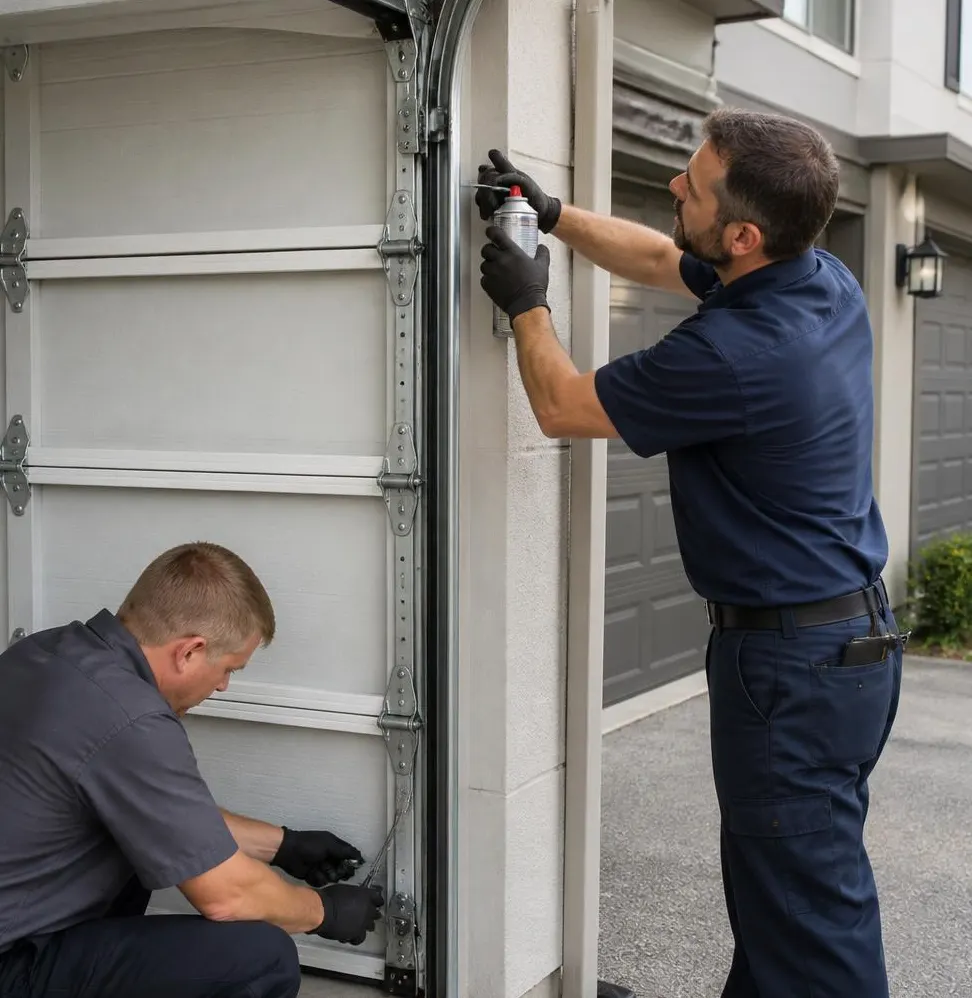
When a technician gets called out about an opener in this area, it's almost always one of two situations. Either it's an older chain-drive unit that's been banging away in a house for twenty years and finally started grinding or slipping, or it's a homeowner who just bought a place and can't believe how loud the garage sounds every morning when someone's rolling out before sunrise. Both calls usually end the same way: a conversation about what the four main opener types actually do differently, because most people have never had a reason to think about it until theirs is failing.
Chain-Drive Openers
A metal chain pulls the trolley along a rail, the same basic design that's been in garages for decades. It's the loudest option by a wide margin, especially once the chain starts to stretch or the sprocket wears, which happens faster with the freeze-thaw cycling and temperature swings common here. But it's also the toughest and least expensive. For a heavy original wood door on an older house, or a detached garage where noise isn't a concern, chain-drive is hard to beat on durability and upfront cost.
- Noise: Loudest of the four, especially as it ages.
- Price: Lowest upfront cost, generally in the $150–$350 range installed.
- Lifespan: 10–15 years with regular lubrication and tension checks.
Belt-Drive Openers
Same basic mechanism as a chain-drive, but the chain is replaced with a reinforced rubber belt. That one change cuts the vibration and clatter dramatically, which matters a lot in attached garages with a bedroom or living space directly above or beside them, a common layout in this area's split-levels and colonials. Belts don't love extreme heat, but they handle humid summers and cold winters reasonably well as long as they're kept properly tensioned.
- Noise: Quiet, smooth operation.
- Price: Moderate, typically $200–$400 installed.
- Lifespan: Similar to chain-drive, 10–15 years, though belts themselves may need replacement sooner than a chain in heavy-use homes.
Screw-Drive Openers
Instead of a chain or belt, a threaded steel rod turns to move the trolley. Fewer moving parts means less to adjust over time, and the noise level sits somewhere between chain and belt. The catch is temperature sensitivity. The grease on that threaded rod thickens in cold weather and can thin out in summer humidity, which means screw-drive units in this climate often need more frequent lubrication checks than the manufacturer's generic schedule suggests, especially after a hard freeze.
- Noise: Moderate, a steady rumble rather than a clatter.
- Price: Comparable to chain-drive, $150–$350 installed.
- Lifespan: 10–15 years, but performance can suffer in winter if maintenance is skipped.
Direct-Drive Openers
This is the newer design: the motor itself travels along a stationary chain inside the rail, rather than the chain or belt doing the moving. With fewer parts wearing against each other, it's the quietest option on the market and tends to need the least maintenance over its life. It's also usually the easiest to pair with smart home features like phone app control and camera integration. The trade-off is cost, and the fact that repairs on the motor unit itself can be pricier if something does go wrong.
- Noise: Quietest of the four by a noticeable margin.
- Price: Highest upfront cost, generally $300–$500+ installed.
- Lifespan: Often 15+ years, with fewer moving parts to maintain.
What Actually Makes Sense for a Typical Home Here
There's no single right answer, but the local housing stock and weather do push the decision in certain directions. A lot of homes in this area have original heavier wood doors, which benefit from the raw pulling strength of a chain-drive. If the garage sits under or next to a bedroom, as it does in a lot of attached-garage layouts around here, the noise difference between chain and belt (or direct-drive) is something you'll notice every single morning, and that's worth paying for.
Cold, icy winters and humid summers both argue for minimizing moving parts that need regular lubrication, which favors belt-drive or direct-drive over screw-drive unless someone is genuinely diligent about seasonal maintenance. For most homeowners replacing an aging opener in this climate, a belt-drive hits the sweet spot of reasonable cost, quiet operation, and solid reliability through freeze-thaw cycles. Direct-drive is the upgrade worth considering for anyone prioritizing quiet and smart features and willing to pay more upfront for less hassle down the road.
When to Call Oxford Garage Door
If your opener is grinding, slipping, or has gotten noticeably louder over a winter or two, that's usually a sign the drive mechanism is wearing out rather than something to ignore. Oxford Garage Door handles both Opener Repair & Installation and ongoing Garage Door Maintenance, so whether the fix is a simple adjustment, a new chain or belt, or a full opener swap to something quieter, they'll walk through the trade-offs for your specific door and garage setup before recommending anything.
If your opener in Oxford, CT is making more noise than it used to, or it's time to plan ahead of winter rather than deal with a failure during a cold snap, call Oxford Garage Door to get it looked at.